
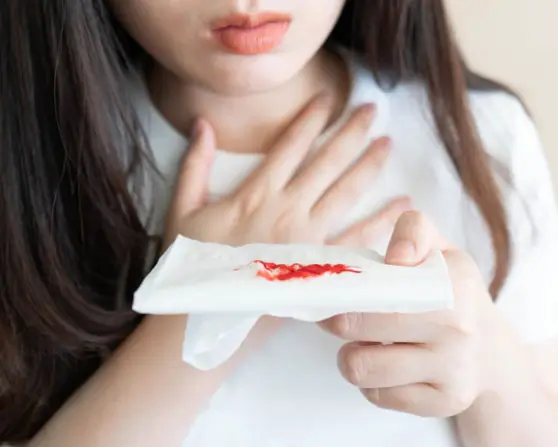
Hemoptysis, often referred to as coughing up blood or blood in sputum, is a common condition but can be quite alarming. It can be threatening in approximately 20% of cases if left untreated. Early diagnosis and treatment are vital for improving outcomes.
Dr. Amol Nagvekar is a Senior Consultant Interventional Radiologist at Rajasthan Hospital (RHL) in Jaipur, which is a tertiary care center for respiratory disease in Rajasthan state. He specializes in minimally invasive treatment of hemoptysis which is Bronchial artery embolization. His extensive experience equips him to provide the best care for hemoptysis patients. If you’re looking for hemoptysis/blood in cough specialist in Jaipur, you’re in good hands.

This is the most obvious symptom and can vary in quantity and color.

Feeling out of breath during daily activities may indicate a problem.

Pain or discomfort in the chest area, especially during deep breaths, should not be ignored.

A whistling sound while breathing can indicate potential airway obstruction.
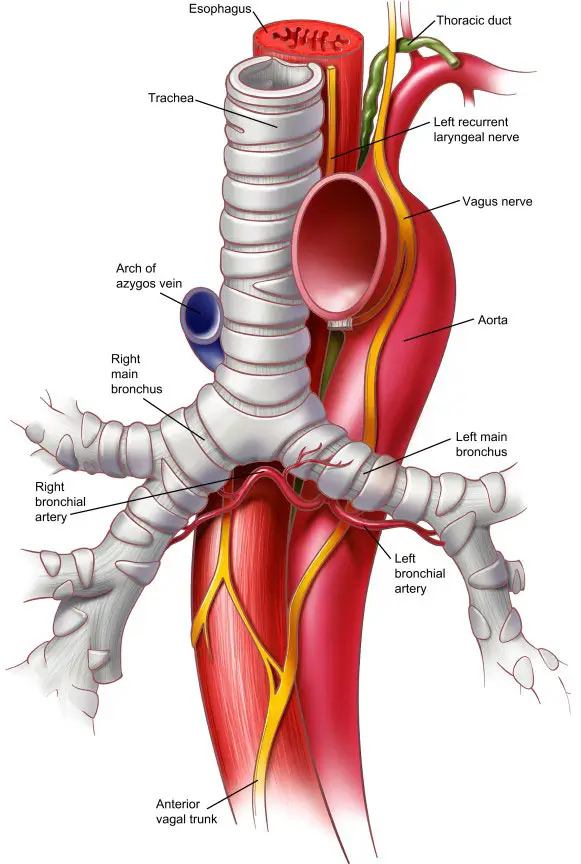
If you notice any of these symptoms, you should consult a Pulmonologist / COPD expert in Jaipur or a hemoptysis specialist immediately.
These steps are critical in accurately diagnosing the underlying cause of hemoptysis, leading to effective hemoptysis treatment.
Choosing the right specialist for hemoptysis is crucial. Here’s why Dr. Nagvekar is a standout choice:
The best treatment for hemoptysis depends on the underlying cause. It may involve antibiotics for infections, bronchoscopy to control bleeding, or surgery in severe cases. Always consult a healthcare provider for proper diagnosis and treatment. For heavy bleeding Bronchial Artery Embolization is lifesaving.
The mortality rate from untreated enormous hemoptysis is greater than 50%. The most instantaneous life-threatening risk is usually asphyxia due to airway obstruction, preferably than exsanguination; so, any degree of hemoptysis causing cardiovascular collapse should be viewed as life-threatening.
Drugs used for managing hemoptysis include tranexamic acid to reduce bleeding, antibiotics for infections, and bronchodilators if the condition is caused by airway inflammation.
Treatment depends on the cause, and a healthcare provider should prescribe the correct medications.
Hemoptysis can be dangerous as it may indicate serious conditions like lung cancer, tuberculosis, or pulmonary embolism. Severe cases can lead to respiratory failure, shock, or death, requiring immediate medical intervention to prevent life-threatening complications.
First aid for hemoptysis includes keeping the patient calm, sitting upright to prevent blood aspiration, and ensuring they breathe slowly. Avoid lying flat. Seek immediate medical help, as prompt, professional care is essential to stop further bleeding.
The best position for hemoptysis patients is sitting upright or leaning slightly forward. This helps prevent blood from entering the lungs, reduces the risk of aspiration, and allows for better breathing. Lying flat should be avoided.