

Many women diagnosed with uterine fibroids wonder whether age affects their treatment options. It’s a common concern, especially when symptoms begin to interfere with daily life but the idea of surgery feels overwhelming.
Fibroids can cause several disruptive symptoms, including heavy menstrual bleeding, pelvic pain, bloating, and even fertility concerns. Some women tolerate symptoms for years, while others seek treatment as soon as fibroids are diagnosed. The challenge is knowing when the right time for treatment actually is.
Age often plays an important role in this decision. Younger women may worry about fertility, while women in their 40s may question whether treatment is necessary if menopause is approaching.
One minimally invasive solution gaining attention is Uterine Fibroid Embolisation, also known as uterine artery embolisation for fibroids. This modern treatment can shrink fibroids and relieve symptoms without major surgery.
But many patients ask the same question: Is there an ideal age to consider treatment? Understanding how age influences fibroid growth and treatment options can help women make informed, confident healthcare decisions.
Understanding Age and UFE Treatment
Before discussing age-related considerations, it is important to understand how Uterine Fibroid Embolisation works.
 What Is Uterine Fibroid Embolisation?
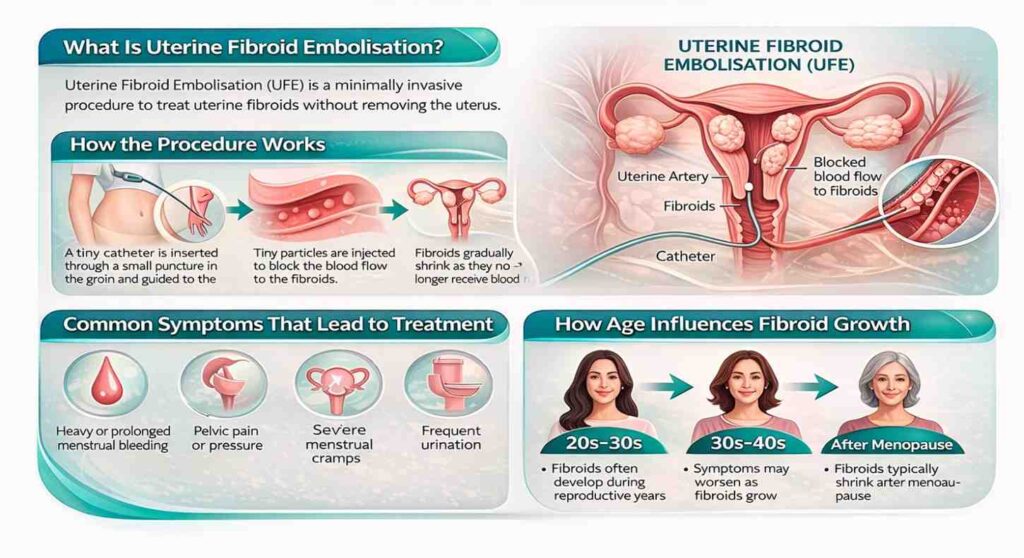
Uterine Fibroid Embolisation (UFE) is a minimally invasive procedure performed by an interventional radiologist to treat fibroids without removing the uterus.
Instead of surgically removing fibroids, the procedure blocks the blood supply that allows them to grow.
Once the blood supply is reduced:
- Fibroids gradually shrink
- Symptoms improve
- Pressure and bleeding decrease
How the Procedure Works
The process typically involves:
- A small catheter inserted through a tiny puncture in the groin or wrist
- Guided imaging to locate the uterine arteries
- Injection of tiny particles that block blood flow to fibroids
Over time, the fibroids shrink naturally because they no longer receive oxygen and nutrients.
Common Symptoms That Lead to Treatment
Many women seek treatment when fibroids begin affecting their daily life. Symptoms may include:
- Heavy or prolonged menstrual bleeding
- Pelvic pressure or abdominal swelling
- Severe menstrual cramps
- Frequent urination
- Pain during intercourse
- Fatigue caused by anemia
These symptoms can appear at different ages, which is why treatment timing varies from patient to patient.
How Age Influences Fibroid Growth
Fibroids are hormone-sensitive growths influenced by estrogen and progesterone.
This means:
- Fibroids often grow during reproductive years
- Symptoms may worsen in the 30s and 40s
- Fibroids usually shrink after menopause
However, waiting for menopause is not always the best option if symptoms are severe.
The good news is that Uterine Fibroid Embolisation can be suitable for women across a wide age range.
When Should You Consider UFE Treatment?
The decision to pursue treatment depends less on age and more on symptom severity and overall health.
Signs That Fibroids May Need Treatment
Doctors typically recommend treatment when fibroids cause:
- Heavy bleeding affecting daily activities
- Chronic pelvic pain or pressure
- Rapid fibroid growth
- Anemia due to blood loss
- Fertility complications
If symptoms disrupt work, sleep, or quality of life, it may be time to explore treatment options.
Medical Evaluation Before UFE
Before recommending uterine artery embolisation for fibroids, doctors conduct several tests to confirm diagnosis and determine suitability.
Common evaluations include:
- Pelvic ultrasound
- MRI imaging
- Blood tests
- Gynecological examination
These tests help assess fibroid size, location, and number.
Step-by-Step Overview of the UFE Procedure
Understanding the process helps many patients feel more comfortable with the idea of treatment.
- Diagnosis and Imaging
Doctors confirm fibroids and evaluate whether embolisation is the best approach.
- Consultation with an Interventional Radiologist
The specialist explains the procedure, benefits, and recovery expectations.
- The Procedure
- Performed under local anesthesia
- Small catheter inserted through the artery
- Tiny particles block fibroid blood supply
- Procedure usually takes 45–90 minutes
- Recovery Timeline
- Hospital stay: typically overnight
- Most patients return to normal activities within 7–10 days
- Fibroids shrink gradually over 3–6 months
Factors That Determine the Right Time for Treatment
Several factors influence when treatment should occur:
- Age and reproductive goals
- Fibroid size and location
- Severity of symptoms
- Overall health and lifestyle
This individualized approach ensures the treatment plan fits each patient’s needs.
Benefits of Choosing UFE at Different Ages
One reason Uterine Fibroid Embolisation has become increasingly popular is its flexibility across different life stages.
Benefits for Women in Their 30s
Women in their 30s may choose UFE because:
- It preserves the uterus
- Recovery time is shorter than surgery
- Symptoms improve quickly
For women balancing careers, families, and busy schedules, avoiding major surgery is often a major advantage.
Benefits for Women in Their 40s
Fibroid symptoms often peak during this stage of life.
UFE can help by:
- Reducing heavy menstrual bleeding
- Relieving pelvic pressure
- Preventing the need for hysterectomy
Many women find that treating fibroids at this stage significantly improves energy levels and daily comfort.
Benefits for Women Approaching Menopause
Some patients nearing menopause hesitate to pursue treatment because fibroids may shrink naturally afterward.
However, if symptoms are severe, uterine artery embolisation for fibroids can still provide significant relief.
Treatment during this stage can:
- Reduce bleeding and anemia
- Improve sleep and comfort
- Prevent repeated hospital visits
Minimally Invasive Alternative to Surgery
Compared with traditional procedures such as hysterectomy or myomectomy, UFE offers several advantages:
- No large surgical incision
- Shorter hospital stay
- Faster recovery time
- Lower complication risk
These benefits make it an appealing option for women of many different ages.
Improved Quality of Life
For many patients, the biggest benefit is simply feeling normal again.
After treatment, women often report:
- Lighter periods
- Less pain
- Reduced fatigue
- Improved mobility
- Greater confidence in daily life
Conclusion: Choosing the Right Time for UFE
There is no single “perfect age” for fibroid treatment. Instead, the right time depends on symptoms, health status, and personal goals.
For some women, treatment may be necessary in their early 30s. Others may choose to address fibroids later in life when symptoms become more disruptive.
What matters most is choosing a treatment that provides relief while supporting long-term health.
Uterine Fibroid Embolisation offers a minimally invasive option that can effectively shrink fibroids, reduce symptoms, and preserve the uterus.
If fibroids are affecting your daily life, consulting a specialist can help you explore whether uterine artery embolisation for fibroids is the right choice.
Learn more about Uterine Fibroid Embolisation and explore whether this minimally invasive treatment is right for you.
FAQs
1. What is the best age for UFE treatment?
There is no single ideal age for UFE treatment. The decision depends on symptom severity, fibroid size, and personal health goals. Many women in their 30s and 40s choose UFE when symptoms interfere with daily life and require effective relief.
2. Can younger women undergo UFE?
Yes, younger women can undergo UFE if fibroids cause significant symptoms. However, treatment decisions should consider fertility goals and future pregnancy plans. A specialist consultation helps determine whether UFE or another treatment option is more appropriate.
3. Is UFE recommended before menopause?
UFE may be recommended before menopause if fibroids cause heavy bleeding, pelvic pain, or anemia. Even though fibroids sometimes shrink naturally after menopause, waiting may not be practical if symptoms significantly affect quality of life.
4. How long does recovery take after UFE?
Recovery after UFE is usually faster than surgical treatments. Most patients stay in the hospital overnight and return to normal activities within seven to ten days. Mild cramping and fatigue may occur during the first few days after the procedure.
5. Does age affect the success rate of UFE?
Age does not significantly affect the success rate of UFE. The procedure is effective for many women across different age groups. Success depends more on fibroid size, location, and overall health rather than age alone.