

It’s Not Just About Fertility
Many men first hear about varicocele when they’re trying to conceive. But what often goes unspoken is this, varicocele doesn’t just affect fertility. It can quietly impact something even more fundamental: testosterone levels.
If you’ve been feeling unexplained fatigue, low energy, reduced muscle strength, mood changes, or decreased libido, you may blame stress, age, or lifestyle. But sometimes, the cause lies deeper, in the veins surrounding your testicles.
And here’s the important part: this condition is treatable. Modern medicine offers a safe, minimally invasive solution called Varicocele Embolization that not only improves sperm quality but may also help restore testosterone levels.
Let’s break down what every man should know.
What Is a Varicocele?
A varicocele is an enlargement of veins inside the scrotum. These veins are responsible for draining blood away from the testicles. When they malfunction, blood pools instead of flowing efficiently.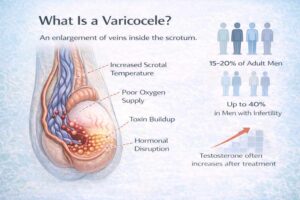
This leads to:
- Increased scrotal temperature
- Poor oxygen supply
- Toxin buildup
- Hormonal disruption
While some men experience scrotal heaviness or pain, many have no visible symptoms, yet hormonal changes may still occur.
In India, varicocele affects:
- 15–20% of adult men
- Up to 40% of men with infertility
- A significant number of men with low testosterone
Clinical research shows that 60–70% of men experience a measurable increase in testosterone levels after Varicocele Embolization, particularly those who had low baseline hormone levels before treatment.
The Link Between Varicocele and Testosterone
The testicles are responsible for producing testosterone. This hormone regulates:
- Muscle mass
- Bone strength
- Sexual drive
- Energy levels
- Mood stability
- Sperm production
For optimal testosterone production, the testicles need a cool, well-oxygenated environment. A varicocele disrupts that balance.
How Varicocele Lowers Testosterone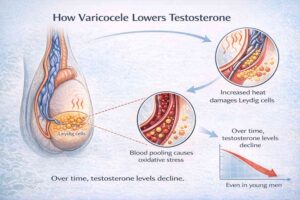
- Increased heat damages Leydig cells (testosterone-producing cells)
- Blood pooling causes oxidative stress
- Hormonal signaling becomes impaired
Over time, this can result in gradually declining testosterone levels, even in young men.
Signs of Low Testosterone in Men with Varicocele
You may not immediately connect symptoms to varicocele, but watch for:
- Persistent fatigue
- Reduced libido
- Erectile difficulties
- Decreased muscle mass
- Increased body fat
- Irritability or mood changes
- Difficulty concentrating
Many men are treated with testosterone supplements without addressing the underlying varicocele, which may only mask the issue.
What Is Varicocele Embolization?
Varicocele Embolization is a minimally invasive, image-guided procedure performed by an interventional radiologist.
Instead of surgery, this technique:
- Uses a small catheter inserted through a vein
- Identifies the faulty testicular veins
- Blocks abnormal blood flow using coils or medical agents
- Redirects circulation to healthy veins
There are:
- No large incisions
- No general anesthesia
- No stitches
- Minimal downtime
Most men return home the same day.
Can Varicocele Embolization Improve Testosterone Levels?
This is the question many men ask, and research gives encouraging answers.
What Studies Show
- 60–70% of men experience a measurable rise in testosterone after treatment
- Men with low baseline testosterone show the most improvement
- Levels often increase within 3–6 months
- Improvement may continue over time
In several clinical studies, testosterone increased by 100–200 ng/dL on average after treatment.
This is significant, especially for younger men hoping to avoid lifelong hormone replacement therapy.
Why Testosterone Improves After Varicocele Embolization
When abnormal veins are blocked:
- Scrotal temperature normalizes
- Oxygen delivery improves
- Oxidative stress decreases
- Leydig cell function recovers
The body often resumes its natural testosterone production.
Unlike hormone injections, which artificially replace testosterone, Varicocele Embolization addresses the root cause.
Varicocele Embolization vs Surgery for Hormonal Recovery
Both surgery and embolization treat varicocele, but embolization offers key advantages:
| Factor | Varicocele Embolization | Surgery |
| Invasiveness | Minimally invasive | Surgical incision |
| Anesthesia | Local | General/Spinal |
| Recovery | 1–2 days | 2–4 weeks |
| Scarring | None | Possible |
| Pain | Minimal | Moderate |
| Hospital stay | Same-day | Often required |
For men focused on hormonal balance and faster recovery, Varicocele Embolization is increasingly preferred.
Who Should Consider Varicocele Embolization for Low Testosterone?
You may benefit if you:
- Have confirmed varicocele on ultrasound
- Experience symptoms of low testosterone
- Have borderline or declining hormone levels
- Want to avoid testosterone replacement therapy
- Have infertility concerns
- Experience scrotal discomfort
Early evaluation is crucial, especially for men in their 20s and 30s.
Recovery and What to Expect
The procedure typically takes 30–60 minutes.
After treatment:
- Mild soreness may last 1–2 days
- Most men resume routine activities within 48 hours
- Heavy lifting is avoided for a week
- Testosterone levels are reassessed after 3 months
Improvements in energy and libido are often noticed gradually.
Emotional Impact!
Low testosterone doesn’t just affect lab numbers, it affects identity.
Men often internalize:
- Fatigue as weakness
- Reduced libido as aging
- Mood changes as stress
- Fertility issues as failure
But if varicocele is the cause, the problem is mechanical, not personal.
And when treated correctly, recovery can feel transformative.
Energy returns. Confidence improves. Strength rebuilds. Relationships heal.
Is Varicocele Embolization Safe?
Yes. When performed by experienced interventional radiologists, the procedure has:
- Over 95% technical varicocele embolization success rate
- Low complication risk
- Minimal recurrence rate
- Excellent safety profile
Kidney function and testicular health are preserved.
Important: Not Every Low Testosterone Case Is Varicocele
While varicocele is common, low testosterone can also result from:
- Obesity
- Diabetes
- Thyroid disorders
- Chronic stress
- Aging
- Certain medications
That’s why proper diagnosis, including blood tests and scrotal ultrasound, is essential before deciding treatment.
A Word to Men Hesitating to Seek Help
In India, many men avoid discussing reproductive or hormonal issues. Social stigma, embarrassment, or misinformation delay diagnosis.
But delaying evaluation can mean:
- Worsening hormone decline
- Persistent fertility challenges
- Emotional strain
Seeking help is not weakness, it’s responsibility.
Conclusion: A Treatable Cause of Hormonal Decline
Varicocele can quietly disrupt testosterone production, affecting energy, fertility, and confidence. But it is one of the few correctable causes of low testosterone.
Varicocele Embolization offers a modern, minimally invasive solution that restores healthy blood flow, supports hormone recovery, and improves quality of life, without major surgery.
If symptoms of low testosterone are affecting you or someone you love, evaluation is the first step. With the right diagnosis and expert care, recovery is not just possible, it’s realistic.
FAQs
1. Can Varicocele Embolization increase testosterone levels?
Yes, Varicocele Embolization can improve testosterone levels in many men. By correcting abnormal blood flow and reducing heat around the testicles, the procedure helps restore normal hormone production. Studies show noticeable improvement in testosterone levels within three to six months after treatment.
2. How long does it take to see hormonal improvement after Varicocele Embolization?
Most men begin to see hormonal improvement within three to six months after Varicocele Embolization. Testosterone production gradually stabilizes as blood flow normalizes and testicular function improves. Follow-up blood tests are typically recommended to monitor hormone levels and recovery progress.
3. Is Varicocele Embolization better than testosterone replacement therapy?
Varicocele Embolization treats the root cause when varicocele is responsible for low testosterone. Unlike testosterone replacement therapy, which supplements hormones artificially, embolization supports natural hormone production. Many men prefer this option to avoid lifelong medication and potential hormonal side effects.
4. Who should consider Varicocele Embolization for low testosterone?
Men with diagnosed varicocele, low or borderline testosterone levels, infertility concerns, or symptoms like fatigue and reduced libido should consider evaluation. If imaging confirms varicocele as a contributing factor, Varicocele Embolization may help restore hormonal balance and improve overall wellbeing.
5. Is Varicocele Embolization a safe procedure?
Varicocele Embolization procedure is considered very safe when performed by experienced interventional radiologists. It requires only local anesthesia, involves no surgical cuts, and has a high success rate. Most patients return to normal activities within one or two days.